
10+
Years Of Experience
Long-Term Solutions for Failed Drain Systems
Main Sewer Line Replacements in Garden Grove for properties with root intrusion, corroded pipes, or collapsed sections causing chronic backups
Main sewer lines fail when tree roots penetrate joints searching for moisture, when cast iron pipes corrode through after decades of exposure to waste acids, or when ground settling cracks rigid pipe materials that can't flex with soil movement. These failures cause sewage backups that affect multiple drains simultaneously, create foul odors in yards where breaks allow waste to seep into surrounding soil, and produce slow drainage that worsens progressively as blockages accumulate inside deteriorating pipes. 8 Plumbing Company replaces damaged sewer lines in Garden Grove after camera inspection confirms the failure location, type, and extent, using excavation methods matched to property conditions and replacement materials designed for long-term durability in soil contact applications.
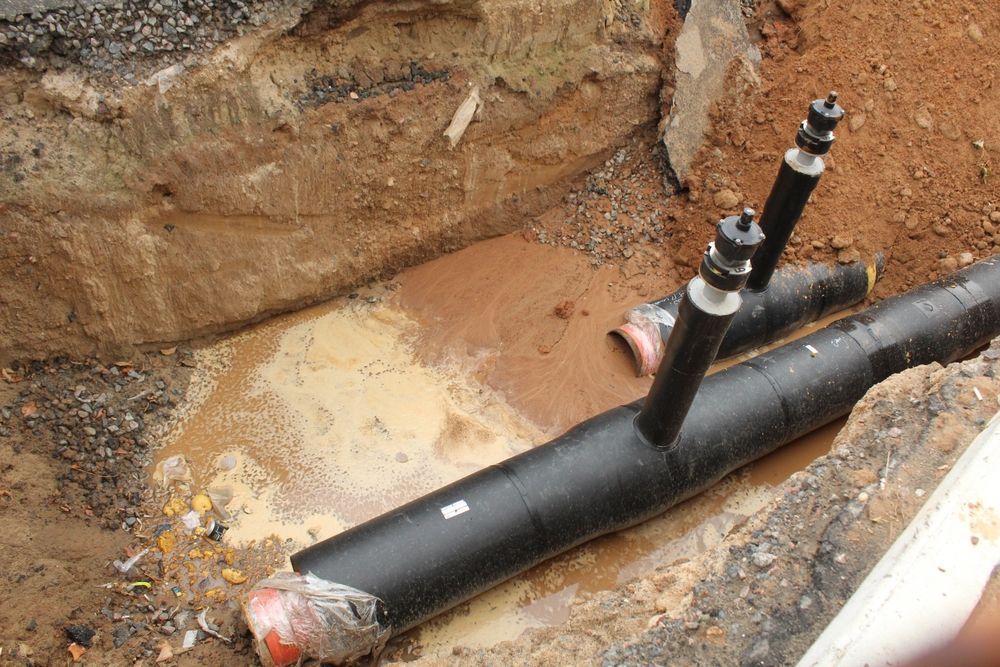
Sewer line replacement begins with camera inspection that maps the route, depth, and condition of your existing line from the building foundation to the municipal connection point or septic tank. Video documentation shows whether failure is localized to one section or distributed across the entire run, which determines whether spot repair is viable or full replacement is necessary to prevent recurring problems. Once the scope is defined, excavation exposes the failed pipe, new pipe sections are laid at the proper slope gradient to maintain drainage velocity, joints are sealed to prevent root intrusion and groundwater infiltration, and backfill is compacted in lifts to prevent settling that could stress the new line.
Schedule a sewer camera inspection to assess your main line condition and receive replacement cost estimates.
Why Root Intrusion Happens and How Replacement Stops It
Older sewer lines use clay or cast iron pipe with joints that rely on compression seals or poured lead, and these connections develop gaps over time that allow hair-like feeder roots to enter, then expand into masses that catch waste and restrict flow. Modern PVC or HDPE sewer pipe uses solvent-welded or heat-fused joints that create continuous, root-impermeable barriers, eliminating the entry points that allow vegetation to infiltrate the drainage system.
After sewer line replacement, drains empty at normal speed without gurgling or slow clearing, toilets flush completely without water rising in shower stalls, and you no longer smell sewage odors in your yard where waste previously leaked from cracked pipe sections. Camera inspections performed months or years later show clean pipe interiors without root growth or sediment accumulation, confirming that the replacement line maintains its drainage capacity.
Replacement projects vary in disruption depending on whether the sewer line runs under landscaping, driveways, or interior floor slabs, and whether trenchless methods like pipe bursting can be used instead of open-cut excavation. Trenchless replacement pulls a new pipe through the path of the old one while fragmenting the existing line, which eliminates the need to dig a continuous trench but requires access pits at each end and only works when the old pipe hasn't completely collapsed. Traditional excavation provides certainty that the old pipe is fully removed and the new line is installed at optimal grade, making it the preferred method for severely deteriorated systems.
Answers to Frequent Sewer Replacement Questions
Sewer line replacement involves significant cost and property disruption, which raises important questions about necessity, methods, and outcomes specific to conditions in Garden Grove.
What signs indicate that sewer line replacement is necessary instead of cleaning?
Recurring backups despite professional cleaning, camera evidence of pipe collapse or separation, and standing water visible in inspection video all indicate structural failure that cleaning cannot resolve.
How do plumbers determine the depth and route of buried sewer lines?
Original building plans sometimes show sewer routing, but camera inspection with locating equipment traces the actual installed path and depth, which may differ from plans if site conditions required adjustments during construction.
Why does excavation sometimes extend beyond the failed section?
Code requires that sewer lines maintain minimum slope for gravity drainage, so replacing a collapsed low spot often means re-grading the line upstream to achieve proper fall, which extends the excavation length beyond the visible failure point.
When is spot repair preferable to full line replacement in Garden Grove?
If camera inspection shows isolated damage in one section with the remainder of the pipe still intact and structurally sound, spot repair costs less and causes limited disruption, but only when surrounding pipe isn't approaching failure from age or material deterioration.
How long does a replacement sewer line typically last?
PVC sewer pipe installed correctly in stable soil has a service life exceeding fifty years, and heat-fused HDPE pipe offers similar longevity with added flexibility that resists cracking from ground movement.
8 Plumbing Company uses camera diagnostics to determine whether your sewer problems stem from blockages that can be cleared or structural failures that require replacement, then completes the work with materials and methods that provide decades of reliable drainage. Contact us to arrange sewer inspection and discuss replacement options if you're experiencing chronic backup issues.